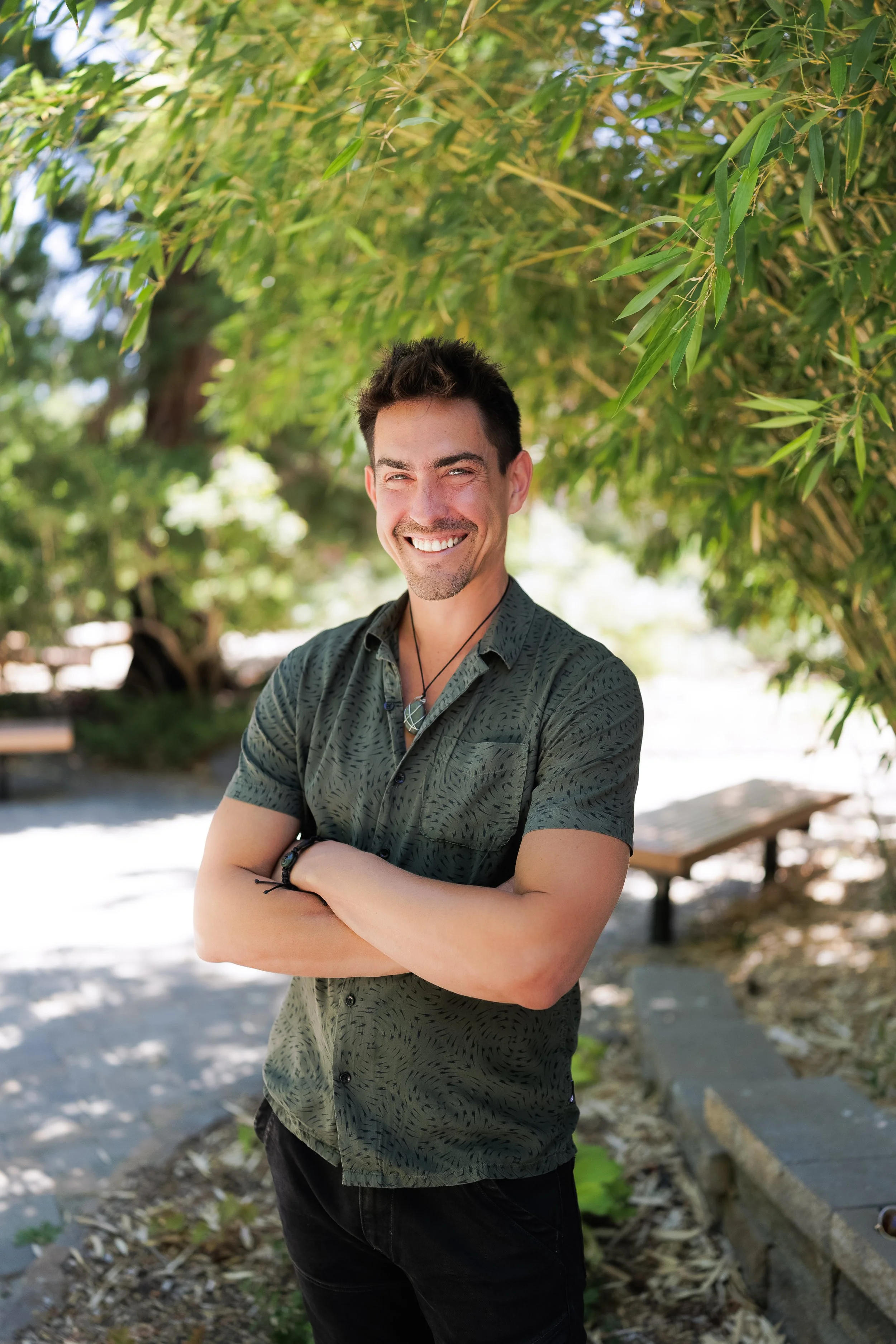
The Media Kit
I'm a medical anthropologist, AI researcher and licensed psychedelic facilitator. My work explores how people heal, adapt and find meaning in times of profound change. I earned my doctorate in anthropology at the University of Pennsylvania, where I trained under Philippe Bourgois. My dissertation fieldwork with Indigenous Qom communities in Argentina's Gran Chaco examined substance use, psychoanalysis and the long shadow of colonial trauma. I then spent nearly a decade at Google leading ethnographic and mixed-methods research in more than 36 global markets, most recently at Google DeepMind, where I shaped how Gemini's personality adapts across cultures and worked on questions of AI safety and mental health. I completed University of Colorado’s inaugural training and am licensed as a Natural Medicine Facilitator in Colorado. I'm pursuing a master's in clinical social work.
That's the version for the conference program. But what makes me a good facilitator and coach has more to do with who I am and what I've been through. So here's the realer me:
The Real Story
I was born in a trailer in the woods outside Johnstown, Pennsylvania, to a family of Slovak, Rusyn and Sicilian immigrants, to a folk-singing dad who settled down after a self-organized US tour. I'm an only child, but the middle of seven close-knit cousins. My first favorite book was a dusty orange hardcover about natural history. Trilobites are awesome. I spent my early years searching for wildflowers, memorizing dinosaurs and chasing meteor showers with my dad. I wanted to know as much as I could about the world, and I wanted to be out in it. It was wonderful. And hard.
I had a stutter. We were poor. I read a lot of Goosebumps, The Lord of the Rings and Thoreau, and played a shit ton of hockey. I served Mass for Franciscan friars. I also read Adventure magazine and dreamed of the Himalayas. I eventually quit classical piano to start a punk band. As a teenager, I would sit outside among the fireflies, listening to emo and contemplating life. I still do that. Stasis and flux. Heraclitus and Ecclesiastes.
A tree-lined walkway (European larches to be specific) had probably too much to do with my decision to attend St. Vincent College. But it was the best choice I could have made. Once there, I took as many courses as I could, stayed up late debating the monks and ran myself ragged on the Ultimate Frisbee team. I enjoyed a particularly amazing internship leading walking safaris in Africa while I did my first ethnography of the camp employees.
My Catholic upbringing and Benedictine formation continue to give me an enduring appreciation for contemplation, community, learning, ritual and retreat.
Buoyed by my heady undergrad, I eagerly began a doctoral program focusing on evolutionary anatomy only to promptly drop out and be forced into a job I thought was below me.
When I reapplied to grad school, I got into UPenn for a Ph.D. in Anthropology and found a home in its holistic approach. I could hardly wait to take my graduate stipend, the most money I had ever had, and blow most of it on 21 days in Tibet, succeeding in earning the worst sunburn imaginable.
This time, I began my doctoral studies in biological anthropology (social endocrinology), fascinated by where we started as hunter-gatherers and how our ways of life were changing. I wanted to go to the ends of the earth and learn how most people lived for most of human history (sadly that wasn't possible. There are no time machines, just good science, no matter what some podcasters say about DMT pens.)
That took me to the Gran Chaco of northern Argentina, working alongside Indigenous Qom people. But when collecting saliva samples raised fears of witchcraft, I felt extractive. I asked the community what they wanted and changed the direction of my work. I shifted into community-led, participatory research on substance abuse, psychoanalysis and colonial trauma. I wanted the knowledge I produced to serve the people whose lives it sought to understand.
The depth of trauma I encountered stays with me. More than four centuries of colonial oppression create a weight of communal suffering I was not prepared for. I struggled to see an adequate response to what people were living with, and I left that work discouraged. Afterward, my own drinking became something I needed to reckon with. Just because you understand a thing doesn't mean you've mastered it.
I moved into design and user research, in part because I couldn’t yet see a path forward in academic or addiction work. At Google and later DeepMind, I worked on questions involving AI, personality, safety and mental health. I had wanted to understand where we came from and how we were changing. Now I was also trying to understand where we were going.
Along the way, I stagnated. Burned out, really. I asked myself: if the next forty years looked like the last ten, why bother? The parent conversations at drop-offs bored me. The job was forever behind a screen. No one bought tickets to see my pathetic little band, even after I tied my dad by getting a song on the radio. I was tired, needed a change, and had no clue how to go about it. My world was small and gray.
There was emo without fireflies.
I went through a divorce and found myself learning how to parent across distance. My own midlife crisis made questions about how to live very immediate.
Meanwhile, advances in psychedelic science and the possibility of legal practice drew me back toward healing work. Then it became personal. Psychedelic experiences, alongside EMDR and the right support, helped me make changes I had been needing to make for a long time. I returned to this work with renewed hope and a more personal understanding of how change really happens.
So I started this practice to again try to put my knowledge to good use. I bring my training, my questions and my own experience into this work. I care about what the research says, what an experience means to you, and how it connects with your body, creativity, relationships, community and sense of purpose. I want our work together to help you find a way forward that you can actually thrive in.
In my journey, I have found success, creativity and fulfillment through perseverance, curiosity and the right people around me.
I believe there should be room for play, frivolity and boredom. I compose music (still can't sell tickets), snowboard, write Bronze Age fantasy, keep carnivorous plants and watch football with my buds. The world is big and colorful.
I still want to learn to scuba dive, hike the Rwenzori Mountains, try roasted armadillo and see a kakapo. It wouldn’t hurt to finally watch the Sopranos either, people say it’s good. You'll usually find me hiking with my dog and daughters, but you probably guessed that by now.
And so, how might we begin?
I start by getting to know you: what brings you here, what feels stuck, what you hope for and what is already good in your life. We’ll make room for uncertainty, too. You don’t need to arrive with a beautifully articulated intention or know exactly what needs to change.
My training as an anthropologist means I pay attention to the world around you. Work, family, culture, faith and community shape our possibilities, our suffering and our healing. I want to understand your experience in that context, including the relationships and resources you can draw on.
I bring curiosity, warmth and a willingness to ask difficult questions. We’ll work together to prepare thoughtfully, establish trust and find a pace that respects your needs. I can offer perspective and help you explore what comes up; you have the final say about what an experience means to you. There is room for both scientific evidence and wonder, and for leaving some questions open.
Throughout our work, we’ll keep an eye on everyday life. What might change in how you spend your time, care for yourself, the way you frame things, what comes naturally? Sometimes the next step is a difficult conversation. Sometimes it’s returning to something you love. I want to help you find changes that matter to you and support you in making them.